

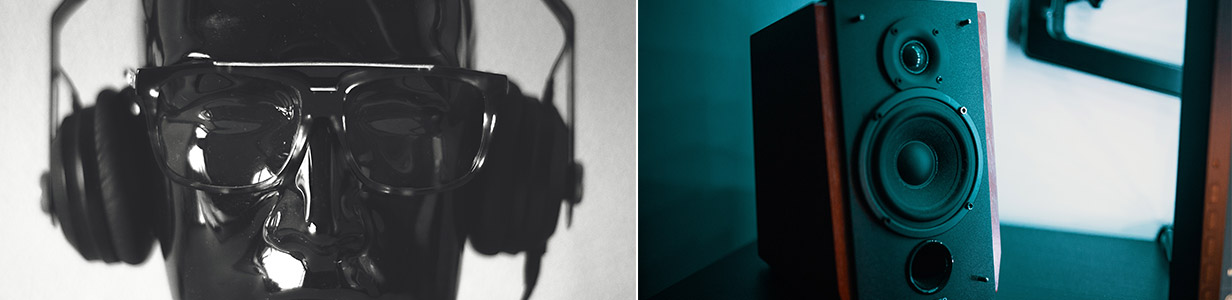
Speakers or Headphones? That is the question. There are some considerations to be taken into account when choosing the correct audio reproduction system to get the most out of using the Losseiver tools.
Quick answer withought needing to read the entire blog (TL;DR):
- Speakers
- If music and voice does not sound ‘tinny’ or harsh through your speakers, they are probably ok to use.
- They allow for a shared experience when listening with others.
- Generally they require setting up and calibrating to get the most out of them.
- The background noise of listening envrionment can have an effect on how you perceive the sound.
- Headphones
- Usually eliminates issues with background noise.
- They are very good at highlighting the subtle difference between sounds.
- They can add a barrier of interaction when you are trying to share the listening experience with someone.
Summary
Speakers allow for a more shared experience when playing back audio with the quality directly affecting how noticeable changes in the sound is. We have found many laptop speakers to be insufficient for listening to sound effects. In the case of hearing the voice in the simulator for example, if setup correctly, speakers can resemble what it would be like if that person is actually in the room. There are some downsides with speakers, particularly as special care needs to be taken with their placement, how they are angled and how the background noise of the listening environment might affect how you hear them.
Headphones pretty much eliminate the background noise issue, and because the loudspeakers within them are so close to your ear, the difference between sounds can be more pronounced. They can only be worn by one person however, so perfect when listening solo, but if you are showing someone else there will be some swapping of headphones to be done.
The Article
Choosing the correct listening device is paramount in ensuring that the quality and headroom is there sufficiently highlight the subtle (and not quite so subtle) audio changes, for example between audiograms within the Hearing Loss Simulator.
Here are some key things to think about when choosing your playback system.
1. Quality
It pays to have better quality, but to get the most out of the listening experience you don’t really need to break the bank, and you might already have what you need. Most portable speakers, computer speakers, hi-fi and reference monitors are a good choice. A simple test is to see whether music and voice sounds full and not ‘tinny’ or lacking in low end (bass). We have found during our tests that many laptop speakers just don’t allow you to perceive the subtle changes in volume and tone that is required, similarly with mobile speakers. Having said this, technology is moving on and many smaller devices adopt techniques to make their speakers sound fuller.
2. Who is listening?
Our aim with this software has always been to allow the hard of hearing to show others what they actually hear, so that someone can better understand and have some idea of how you are affected in day to day life. That moment when you share this with someone and see their reaction is a powerful thing, and having no barriers between the software and what you both hear is crucial. Using speakers allow you and whoever and how ever many people you are sharing it with to hear everything at the same time. This shared experience is often lost when using headphones. Of course, when listening solo headphones may be the preferred choice.
No responses yet